
Top Trends in the Paper Industry for 2025
As we approach 2025, the paper industry is gearing up for some exciting changes. Two major trends stand out: advancements in digital printing technologies and the rise of automation in production processes. These innovations promise to reshape how companies operate and deliver paper products to consumers.
Digital printing allows for shorter print runs and more customization, meeting the specific needs of businesses and consumers. Meanwhile, automation is set to enhance efficiency and streamline production, reducing costs and errors. Together, these trends will lead to a more responsive and dynamic paper industry.
Innovations Shaping the Future of the Paper Sector in 2025

As we look towards 2025, one exciting trend is the rise of digital printing technologies. These advancements will allow for shorter print runs and more customization, catering to the demands of businesses and consumers alike. Companies are expected to adopt these solutions to enhance efficiency and meet specific market needs, shifting away from traditional bulk printing methods.
Another significant movement is the focus on automation within the production process.
As the print industry moves towards 2025, several trends are shaping its future, particularly in digital printing technologies and automation. The following table outlines key advancements and their impact.
| Trend | Description | Impact |
|---|---|---|
| Digital Printing Technologies | Advancements in digital printing allow for shorter print runs and greater customization. | Meets specific market demands and enhances efficiency. |
| Customization | Ability to tailor products for individual consumers and businesses. | Increases customer satisfaction and brand loyalty. |
| Automation | Implementing automated processes in printing production. | Reduces labor costs and increases production speed. |
| Shift from Bulk Printing | Moving away from traditional bulk printing methods to on-demand solutions. | Reduces waste and aligns with market needs. |
| Enhanced Efficiency | Improved workflows and turnaround times in production. | Allows businesses to respond rapidly to market changes. |
| Market Adaptation | Business strategies focusing on adopting innovative printing solutions. | Enables companies to be competitive and relevant. |
Factories will likely incorporate more automated systems, which can streamline operations and reduce costs. This tech-forward approach aims to enhance productivity and minimize human error, enabling faster turnaround times in paper production.
Moreover, the paper industry is set to see an increase in the use of alternative raw materials. Innovations are being explored that utilize non-wood fibers, such as hemp or agricultural residues.
This shift could help diversify the types of products available while potentially lowering reliance on traditional wood sources.
Lastly, consumer preferences will drive growth in specialty papers. Products such as artisanal papers, eco-friendly options, and those with unique textures or finishes will likely gain popularity. This trend reflects a broader interest in quality and uniqueness in the paper products consumers choose for personal or business use.
Ons in Paper Production Techniques for 2025
The future of paper production in 2025 will see notable advancements that streamline processes and enhance quality. One exciting development is the integration of artificial intelligence (AI) in the manufacturing workflow. AI can analyze production data in real time, allowing factories to optimize their operations. This technology helps in predicting machine failures, ensuring consistent product quality, and tailoring production schedules based on demand trends.
Another innovation is the implementation of smart sensors in production lines. These sensors can monitor various parameters like humidity and temperature, crucial for achieving the right paper quality. With increased precision in monitoring, manufacturers can make immediate adjustments, reducing defects and waste.
Furthermore, the industry is likely to adopt 3D printing technologies for creating prototypes of paper products.
This will enable designers to visualize and test ideas quickly before moving to full-scale production. Such practices can speed up the development of new paper products while enhancing creativity and innovation.
Lastly, there will be a shift towards modular production systems. These systems allow companies to easily adjust their production lines to accommodate different products or changes in volume.
This flexibility can lead to more efficient use of resources and quicker responses to market changes.
Digital Transformation’s Influence on the Paper Sector
Digital transformation is making a significant difference in the paper industry. One major effect is the ability for companies to use data analytics extensively. By analyzing customer preferences and market trends, businesses can make smarter decisions. This means they can offer products that fit what customers are looking for, leading to better sales and customer loyalty.
Furthermore, the integration of digital tools helps streamline production processes. For example, digital workflows can reduce the time it takes for orders to be completed. With faster processes, companies can respond quickly to changing demands. This agility is important in maintaining and growing market share.
Digital transformation also improves communication within organizations. Teams can share information more easily, leading to better collaboration in production planning and inventory management. Enhanced communication minimizes misunderstandings and errors, ensuring that products are delivered on time and as expected.
Another critical aspect is the implementation of e-commerce platforms.
These platforms enable companies to reach a wider audience, allowing customers to place orders online easily. As more people shop online, having a strong e-commerce presence can significantly boost sales.
Finally, digital transformation fosters innovation. Companies can experiment with new paper products and designs using digital prototypes.
This innovation enables them to adapt quickly to trends, keeping their product offerings fresh and exciting for consumers.
Erging Markets for Paper Products in 2025
In 2025, emerging markets for paper products are expected to show significant growth. Regions such as Asia-Pacific, particularly India and Southeast Asia, will likely be at the forefront. Rapid urbanization and increasing disposable incomes in these areas are driving demand for various paper products, including packaging, printing, and specialty papers.
India, for instance, is witnessing a surge in e-commerce, which greatly impacts packaging needs.
As online shopping rises, companies will seek efficient and innovative packaging solutions to enhance customer experience. This trend is set to increase the demand for both conventional and specialty paper packaging.
Additionally, Latin America is poised to experience growth in paper consumption. The expansion of the consumer market, alongside improvements in logistics and distribution networks, will contribute to a robust demand for paper goods.
Countries like Brazil and Mexico are focusing on enhancing their manufacturing capabilities, which may lead to a rise in local production of paper products.
In the Middle East and Africa, urban development projects are expected to create opportunities for paper products. Increased construction and the rise of retail spaces will drive demand for packaging and branding materials. Companies in these regions are innovating to cater to specific local needs, which may enhance market adaptability.
Furthermore, the trend toward sustainable materials is beginning to influence markets, albeit in a focused manner, as consumers start to show preferences for recyclable or environmentally friendly options. This shift may lead manufacturers to explore new raw materials and production methods.
Overall, the outlook for emerging markets in 2025 presents numerous opportunities for growth in the paper sector, driven by changing consumer behaviors and advancements in technology. Companies that can adapt to these trends may find themselves at the forefront of this evolving landscape.
Future Dynamics of the Paper Sector in 2025
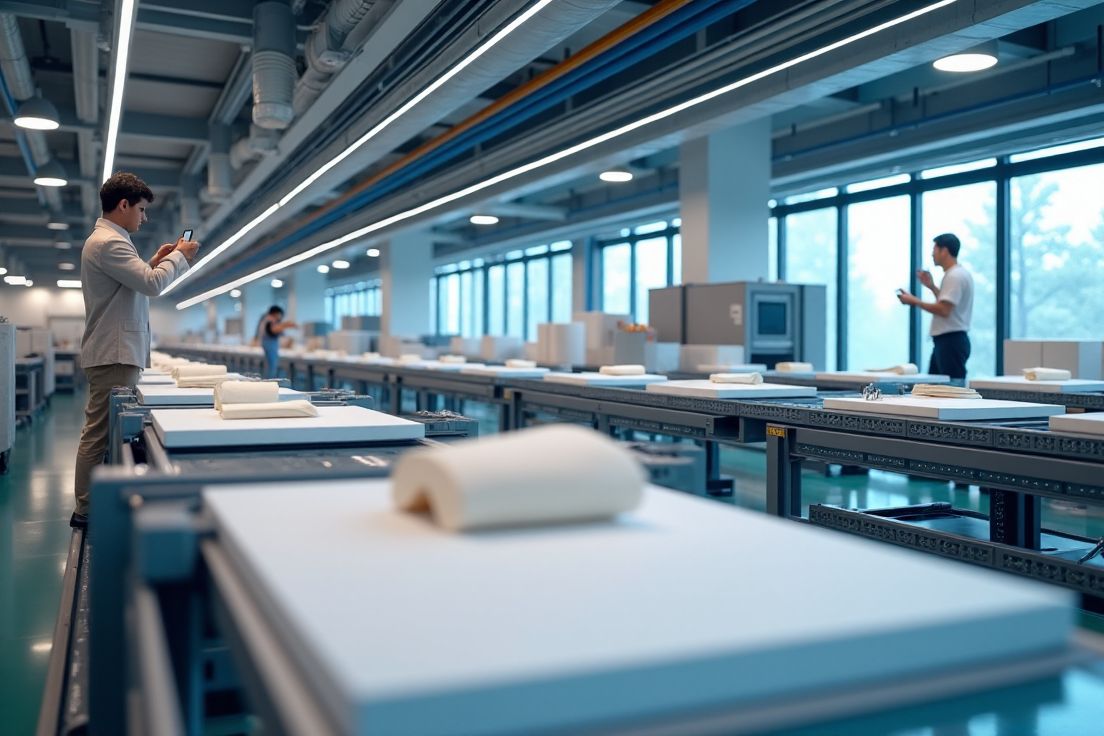
As 2025 approaches, the paper industry is poised for several notable changes. One key development is the increase in digital workflows. This allows businesses to operate more smoothly by automating various tasks, helping to cut production times. Improved technology will enable quicker adjustments to orders based on real-time data.
This agility is crucial for meeting customer needs efficiently.
Another exciting trend is the use of artificial intelligence. AI will become helpful in predicting trends and managing inventory levels effectively. By understanding patterns in demand, companies can refine their operations to better suit market needs.
This predictive capability will lead to less waste and more cost-effective production.
The rise of e-commerce continues to influence packaging designs, with businesses focusing on unique and eye-catching options. Custom packaging solutions will become essential, enhancing products’ appeal during shipping. This trend aligns with the growing competition in the online marketplace.
Additionally, there will be a greater emphasis on innovation with the introduction of smart materials. These modern papers offer enhanced features such as increased durability or enhanced printability. Companies will explore these materials to meet evolving consumer preferences, allowing for more creative and specialized products.
The integration of enhanced quality control measures will also transform production methods.
Innovations in Paper Production Technologies
Advancements in paper production technologies are pivotal for shaping the future of the industry. One key innovation is the use of high-efficiency pulping processes. These methods increase yield while reducing energy consumption, helping manufacturers get more pulp from the same amount of raw material. This means less waste and more effective use of resources.
Advancements in paper production technologies are crucial for the evolution of the industry, particularly through innovative pulping processes. Below are key benefits associated with these advancements:
- Enhanced efficiency leading to increased pulp yield from raw materials.
- Lower energy consumption, resulting in cost savings for manufacturers.
- Minimization of waste, promoting a more effective resource management strategy.
- Improved quality of pulp produced, facilitating higher-quality paper products.
- Facilitation of recycling processes, ensuring better recovery of materials and energy.
Additionally, developments in chemical additives play a crucial role. New agents can enhance paper properties like strength, brightness, and printability. This improvement leads to better overall product quality, which helps meet the diverse needs of consumers and businesses.
Further progress is seen with the incorporation of digital twin technology.
By creating virtual models of the production process, manufacturers can simulate various scenarios. This allows for better planning and optimization of operations, ultimately leading to increased efficiency and reduced downtime.
Another interesting trend is the rise of energy-efficient machinery. These machines consume less power during the production process.
Integrating new drives and better motors helps decrease operational costs while maintaining high output levels.
Finally, the integration of blockchain technology offers improved traceability in the supply chain. This technology allows consumers to track the origins of the paper products they purchase, increasing transparency and trust. It also helps manufacturers streamline logistics and inventory management, creating a more efficient production environment.
Digital Transformation in the Paper Industry
Digital transformation is becoming essential in the paper industry. It allows companies to utilize advanced technologies that improve every part of their processes. For instance, integrating cloud-based solutions enables teams to access critical data from anywhere. This accessibility enhances flexibility and speeds up decision-making, leading to more efficient operations.
Moreover, automation tools are revolutionizing how tasks are performed. By replacing manual workflows with automated systems, companies minimize errors and lower labor costs. This shift leads to quicker production cycles, making businesses more responsive to customer demands.
Another impactful advancement is the use of augmented reality (AR) in production.
AR can help train employees and guide them through processes. Workers can wear AR glasses that overlay instructions directly onto their field of vision, improving training efficiency and safety on the job.
Furthermore, incorporating mobile applications is transforming customer interaction. These apps allow clients to place orders or track shipments directly from their smartphones.
Such immediacy enhances the customer experience and increases satisfaction.
Overall, the increasing role of digital tools in the paper industry signifies a significant shift. Companies embracing these technologies can improve their competitiveness and adapt to rapidly changing market conditions. This transformation supports the industry’s evolution, enabling tighter control over production and distribution processes.
Changes in Consumer Preferences Impacting Paper Products
Consumer preferences are evolving significantly and are having a major impact on the paper industry. Shoppers today are looking for unique and high-quality products. This change is leading to an increased interest in specialty papers. Items such as custom printing on textured paper and artisanal options are becoming popular choices for both personal and business use.
As consumer preferences shift, the paper industry is experiencing significant changes influenced by shoppers’ desires for quality and uniqueness. The demand for specialty papers is on the rise, reflecting a growing interest in customized and artisanal products.
- Growing popularity of custom printing services that cater to individual or business needs.
- Increased demand for textured and unique paper options to enhance product presentation.
- Artisanal paper products are gaining traction, appealing to consumers seeking exclusivity.
- Consumers are willing to invest in higher-quality paper products for memorable experiences.
- Traditional paper usage is evolving, with digital integration prompting innovative paper solutions.
Moreover, people are showing a preference for more personalized products. This demand is pushing companies to offer greater customizability in their paper goods. Consumers want items that reflect their personal style or brand identity. As a result, businesses are investing in digital printing technologies that enable shorter runs and tailored designs.
This trend provides an opportunity for companies to cater more directly to their customers desires.
Another important shift is the move towards premium products. Many buyers are now willing to spend more for paper products that offer a luxurious feel or unique features. This trend benefits manufacturers who focus on quality and innovation.
In response, companies may enhance their packaging options or introduce high-end paper types that stand out in a competitive market.
Additionally, theres a growing focus on the shopping experience itself. Consumers appreciate brands that create engaging, memorable interactions, whether online or in-store. Companies that prioritize excellent customer service and user-friendly purchasing processes will likely gain an advantage.
This trend may lead to more businesses improving their e-commerce platforms and customer support systems to meet expectations.
The shift in consumer behavior emphasizes convenience as well. Many customers prefer quick and straightforward purchasing processes. This preference drives companies to streamline their operations and develop efficient logistics to ensure timely delivery of products.
Future Perspectives on the Paper Sector in 2025

One emerging trend in the paper industry by 2025 is the increasing emphasis on health and safety standards. Companies are expected to implement stricter guidelines to ensure the well-being of employees during production processes. This will involve investing in better protective equipment and training programs to enhance workplace safety.
Additionally, there’s a noticeable shift toward greater transparency in the supply chain.
Businesses will likely focus on clearer communication regarding the sourcing of materials and the production processes used. This trend aims to build trust with consumers who are becoming more aware of where their products come from.
The integration of e-commerce strategies will also shape future developments. As online shopping continues to grow, paper product companies will enhance their digital presence, making it easier for customers to order and receive products.
This approach will likely include better customer service options and efficient delivery systems.
Another important aspect is the focus on developing smarter manufacturing facilities. This means that plants will use connected technologies to monitor operations in real time. By doing this, companies can optimize their production processes and reduce downtime, contributing to better overall performance.
Innovations in Paper Manufacturing Technologies
Innovations in paper manufacturing technologies are set to revolutionize the industry. One significant advancement is the development of advanced automation systems that streamline various processes. These systems can monitor machinery, manage settings, and adjust production lines, contributing to higher efficiency and reduced downtime.
Additionally, there are breakthroughs in the use of nanotechnology.
By manipulating materials at the molecular level, manufacturers can create paper with enhanced propertiessuch as increased strength and durabilitywithout adding excessive weight. These qualities allow for improved performance in various applications, from packaging to printing.
Moreover, the integration of machine learning algorithms into manufacturing processes provides real-time analytics. This helps factories predict equipment failures before they happen, which minimizes interruptions in production.
With these systems, producers can optimize their operations based on historical data and trends.
Another interesting trend is the development of customized production techniques. These methods allow for small batch runs tailored to specific customer needs. This flexibility not only caters to individual demands but also reduces the need for large inventories, aligning production with real-time market conditions.
Increasing Demand for Lightweight Paper Products
The demand for lightweight paper products is surging as companies and consumers seek more efficient and practical solutions. These products are not only easier to handle but also reduce shipping costs due to their lower weight. Businesses are recognizing that lightweight papers can lead to significant savings in both transportation and production expenses.
In the packaging sector, for example, lightweight paper materials are becoming increasingly popular.
They help create packaging that is sturdy yet less burdensome, making it an ideal choice for many brands. As e-commerce continues to grow, businesses are focusing on lightweight options that also protect their products during shipping while maximizing space efficiency.
Another area seeing growth is the use of lightweight papers in printing. These materials enable high-quality printing while minimizing the overall weight of printed items like brochures, flyers, and catalogs.
As companies strive to make their marketing materials more impactful without increasing costs, lightweight paper becomes an appealing choice.
Furthermore, advancements in technology are allowing manufacturers to produce lightweight papers that do not compromise on quality or durability. Innovations in pulping and paper-making processes have introduced new materials that maintain strength while significantly lowering weight. This increases the versatility of paper products and opens up new markets.
Growth of Digital Printing Applications
The growth of digital printing applications is rapidly transforming the paper industry. Businesses are now embracing this technology for numerous reasons. One major advantage is its ability to produce high-quality prints quickly and efficiently. This speed allows companies to meet tight deadlines and respond to customer demands with greater agility.
Moreover, digital printing enables customization like never before. Companies can easily create personalized products tailored to individual customers or specific marketing campaigns. This level of personalization increases customer satisfaction and loyalty, as consumers appreciate products that cater to their unique needs.
Digital printing also supports smaller print runs without incurring high costs.
Businesses no longer need to print large quantities to justify expenses. Instead, they can produce only what is necessary, reducing waste and optimizing their inventory management.
Additionally, the technology allows for variable data printing, which means that each printed piece can contain different information or images. This feature is especially beneficial for direct marketing materials, where targeting specific demographics can increase engagement rates.
Frequently Asked Questions
This FAQ addresses common questions regarding the innovations and trends shaping the paper industry as we approach 2025.
What are the key trends expected in the paper industry by 2025?
The key trends include advancements in digital printing technologies, increased automation in production processes, a shift from bulk printing to on-demand solutions, and the use of alternative raw materials.
How is digital printing technology changing the paper sector?
Digital printing technology allows for shorter print runs and greater customization, enabling businesses to respond more effectively to specific market needs and consumer demands.
What role does automation play in the future of paper production?
Automation is expected to streamline production processes, reduce labor costs, and increase production speed, which will enhance overall efficiency in the paper industry.
Are there emerging markets for paper products in 2025?
Yes, emerging markets like Asia-Pacific, particularly India and Southeast Asia, as well as Latin America and parts of the Middle East and Africa, are expected to see significant growth in demand for paper products.
What innovations in paper manufacturing technologies are on the horizon?
Innovations include high-efficiency pulping processes, the use of nanotechnology for stronger and lighter papers, advanced automation systems, and the integration of machine learning for real-time analytics.
How are consumer preferences impacting the types of paper products produced?
There is a growing demand for unique and customizable paper products, with consumers seeking high-quality specialty papers and personalized options, influencing companies to adopt more flexible production methods.
What is the expected impact of digital transformation in the paper industry?
Digital transformation is enhancing operational efficiency, improving data accessibility, streamlining production processes, and enabling better customer interactions through e-commerce platforms and digital tools.
Conclusion
The paper industry is on the brink of exciting changes as we approach 2025. Digital printing technologies and automation will play a pivotal role in shaping how companies operate. These advancements promise increased efficiency, reduced waste, and the ability to produce customized products that meet specific consumer needs.
As companies explore alternative materials and innovative production techniques, the diversity of paper products is set to grow. This will not only cater to changing consumer preferences but also carve out new markets, especially in regions like Asia-Pacific and Latin America.
Related Posts